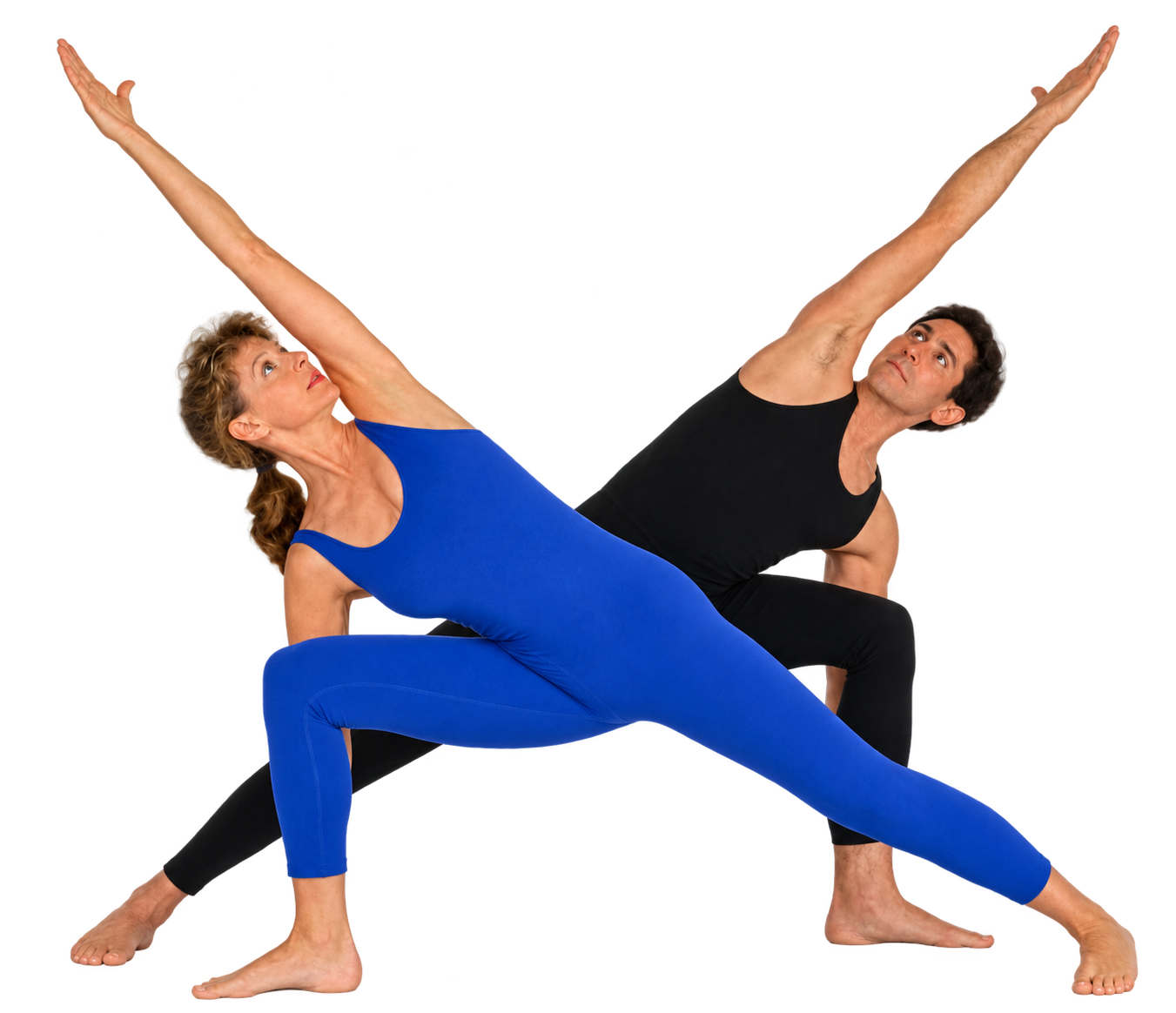
The Paradox of Yoga
Merriam-Webster defines a paradox as "a tenet contrary to perceived opinion or expectation... a statement that is seemingly contradictory in nature."
The world of yoga is full of these apparent contradictions. Today, there are countless styles and teaching philosophies. Some strictly follow the teachings of a single guru, while others combine the insights of many. Some practices are purely physical, while others mix movement with spiritual philosophy. Some approaches are so aerobically intense that only the fittest survive, while others are so physically undemanding that their most vigorous moment is simply lying down on the floor.
The style of exercise-based yoga I teach is inherently paradoxical:
It is universal: World-class athletes and individuals with severe physical limitations can practice and benefit from it side by side. I enjoy training fit, high-performing individuals, yet I am equally committed to working with people recovering from chronic illness or injury.
It blends Eastern and Western thought: Although I studied yoga extensively in India and support alternative healing, I have rejected any esoteric or religious teaching and base my approach to yoga in Western anatomy, kinesiology, and physical medicine.
It ignores conventional markers of progress: Traditional yoga often focuses heavily on extreme flexibility, but I don't care if you ever touch your toes.
Regardless of physical ability, everyone starts my approach the same way: by slowly learning to control the breath and sync it with simple, easy-to-learn body movements. Paradoxically, by eliminating strain and refusing to force the body, you safely build far greater strength, flexibility, and endurance than you ever thought possible by using brute effort.
Even the breath itself is a paradox. Most people ignore breathing because it happens automatically. Yet when you consciously slow your breath while moving through yoga postures, something surprising happens: you feel deeply relaxed, yet your physical energy noticeably increases.
In fact, learning this approach is often slightly harder for naturally flexible people than for those who are stiff. Flexible practitioners tend to rely on their joint laxity rather than building controlled stability. While my students certainly improve their flexibility, strength, and endurance, achieving those physical traits is actually not the main goal.
So, what is the goal?
Beyond simply feeling better, there isn't one—because having a rigid goal causes you to "try," and trying gets in the way. The word yoga literally means "balance" or "union," yet even that definition holds a paradox. Because of how the human body is constructed, perfect physical balance is impossible to achieve.
That is why "trying" works against you. Trying implies aggressiveness, pushing, and forcing—all of which usually leads to tightness, strain, and injury. In this practice, doing less correctly gets you more.
If absolute balance is unachievable, why practice at all? Because non-forceful yoga quietens the mind, lowers stress, and encourages self-awareness, while simultaneously refreshing your outlook and conditioning your physical body. It makes you feel significantly better than when you don't practice—yet if you push too hard, you end up feeling worse.
The way I teach yoga is paradoxical, contradictory, and completely counterintuitive to modern fitness culture. But once you step on the mat and stop forcing, it simply works.