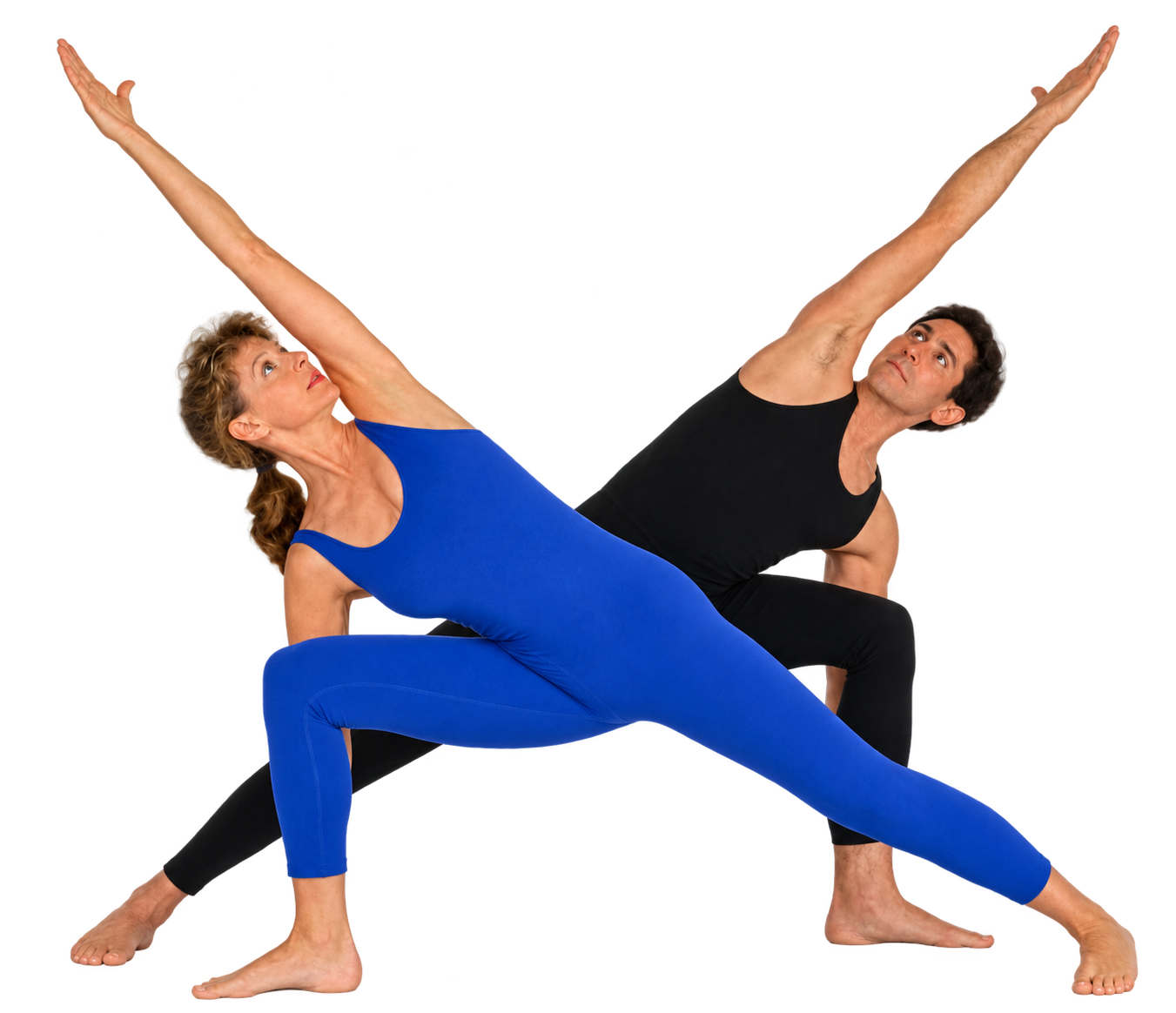
Get More by Doing Less with Yoga
For decades, I have been advancing a fundamental premise: in exercise, you can "get more by intelligently doing less."
I did not reach this conclusion overnight. It evolved over a decade of practicing and teaching what was originally a very demanding, physical approach to yoga—a style so disciplined and powerful that it attracted both professional and amateur athletes.
Strangely enough, my perspective on exercise did not change much during those early years, even when I repeatedly injured myself. During that formative period, I demanded that my naturally stiff, inflexible frame transform so that I could place my hands flat on the floor, sit comfortably cross-legged, and do the splits.
I was pursuing all those hyper-flexible feats people assume yoga is supposed to be about. Along with that flexibility focus, my early training emphasized a strong cardiovascular component that offered a complete, high-intensity fitness package.
Back then, in my thirties, I felt invincible. I held onto that mindset even after tearing my lower back muscles trying to touch my toes, tearing a ligament in my right knee trying to force a cross-legged seat, and tearing a groin attachment in my endless quest to become more flexible.
When we are young, we are blessed with a remarkably resilient body—or so I thought. My body seemed to bounce back at the time, but years later, those old injuries reemerge from time-to-time causing discomfort.
I still practice yoga today, but I have learned a great deal over the past decades. Not only have I grown older, but I have also grown wiser. I no longer push my physical limits the way I did in my youth, primarily because I experienced a profound paradigm shift in my approach to movement.
After years of studying anatomy, physiology, and kinesiology to truly understand how yoga has its effect on the human body, I arrived at two distinct conclusions:
Younger Bodies (Under 30): Younger individuals generally need to push their physical and mental envelopes. Aggressive physical exploration is largely how younger people learn their limits and understand how their bodies interact with the world.
Mature Bodies (40 and Beyond): As we age, our bodies undergo undeniable, natural evolutionary changes. The high-impact, forcing style of exercise suited for a twenty-year-old is simply no longer appropriate for people moving into their fifties, sixties, and beyond—and it is dangerously counterproductive for anyone recovering from chronic illness or major injury.
This does not mean we should stop exercising. On the contrary, staying active is essential for long-term health. However, as with every other aspect of life as we grow older, we must learn to work smarter, not harder.
That philosophy is the bedrock of the ExTension and Recovery Yoga . It is about learning to approach exercise from an entirely new perspective. In fact, this non-forceful method is so different from traditional fitness conditioning that it initially feels counterintuitive.
By letting go of aggressive "trying" and instead learning how to intelligently "do" your exercises without force or strain, you stimulate your body to operate far more efficiently. Without pushing into pain, your soft tissue relaxes, your nervous system settles, and your physical system naturally yields—improving strength, flexibility, endurance, and overall vitality.
Ultimately, mature health is not achieved by battling your body or forcing it into submission. When you stop striving for superficial markers of flexibility and focus on intelligent, non-forceful movement, your body rewards you with lasting resilience. By learning to do less on the mat, you unlock the ability to get far more out of life.