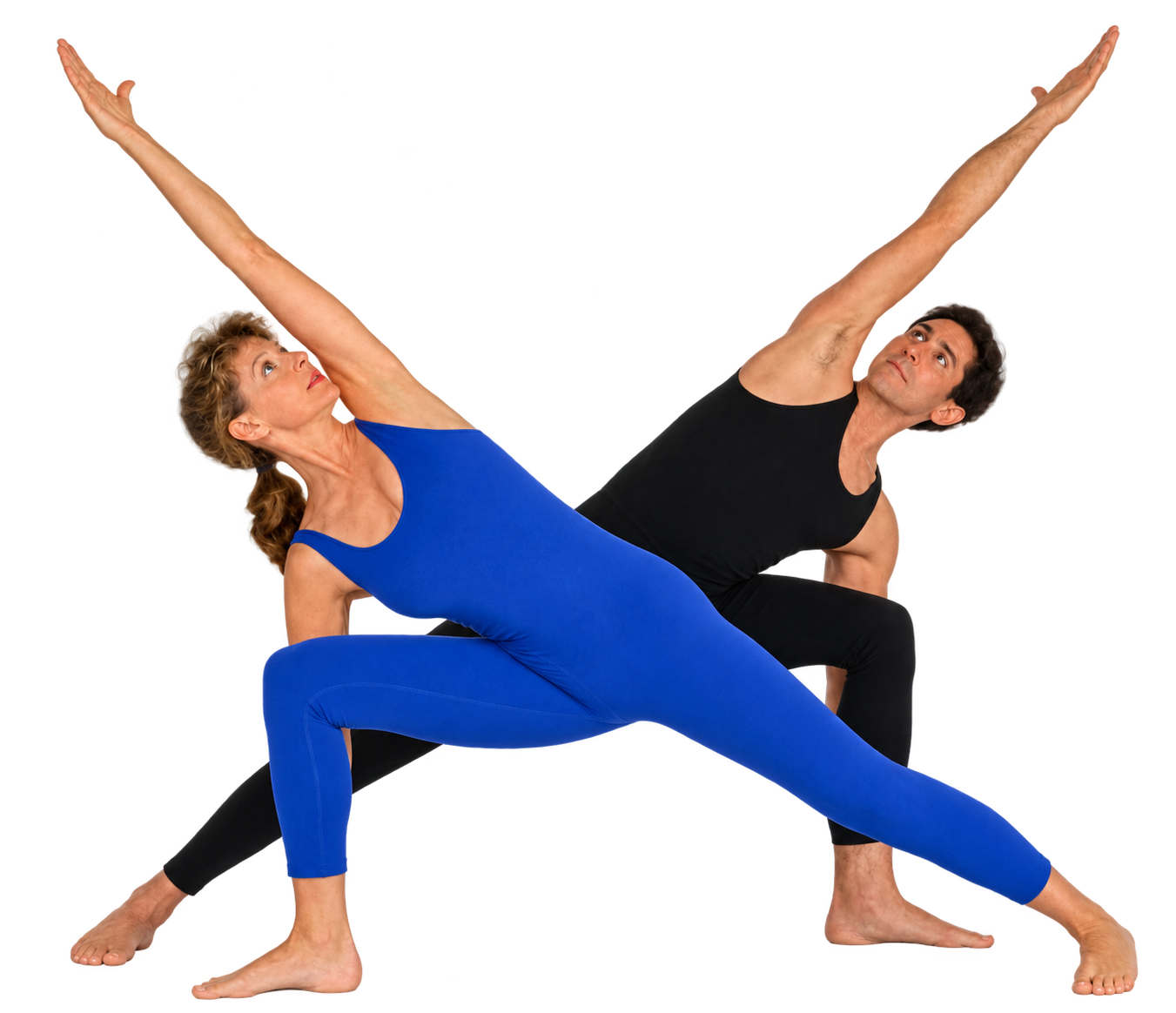
The Distinction Between Trying and Doing
Everyone knows exercise promotes good health. Right?
Not necessarily. When forced, any form of exercise—including yoga—carries real risks. These risks grow significantly higher for anyone who is chronically ill, managing an injury, or navigating the natural changes of aging. When appropriately practiced, yoga can be a powerful tool to help you rebuild your conditioning. Practiced aggressively, however, it can leave you worse off than when you started.
Yoga encompasses a vast spectrum of approaches. Some styles are aerobically intense, with instructors turning up the heat (both literally and figuratively). Others demand extreme flexibility or sheer physical stamina, with teachers pushing students to "work through the pain." On the opposite end of the spectrum are styles that emphasize sitting cross-legged, deep breathing, and chanting in a low-intensity, stress-free environment.
Yet across all of these approaches, one rule holds true: the harder you try to do yoga, the higher your risk of strain and injury. It makes no difference whether you are trying hard to achieve a difficult posture or trying hard to force yourself to relax—aggression in either direction can aggravate old injuries or create new ones.
Here is why:
When you are recovering from an injury, managing a chronic condition, or simply growing older, your body's soft tissue naturally contracts. Muscles, tendons, ligaments, and fascia all make up this soft-tissue network. When these tissues tighten, the nerves passing through them become irritated and stimulated. That irritation triggers a reflex action: the surrounding soft tissue contracts even further. Your body stiffens, tension builds, and pain increases.
To break this vicious cycle, we must stop trying to exercise and instead learn how to do exercise.
This is not merely a matter of semantics:
Trying is competitive, aggressive, and goal-focused. It pushes against your body's current limits, irritating an already stressed system and tightening soft tissue.
Doing is non-forceful, observational, and adaptive. It meets your body where it is, creating the safe environment necessary for true physical change.
By shifting from trying to doing, yoga becomes an invaluable method for overall conditioning, pain management, and aging gracefully—all without further stressing an already overtaxed body.Ultimately, progress in yoga does not come from pushing harder or forcing your body into submission. When you stop trying to accomplish a posture and simply focus on doing the movement correctly and without strain, your nervous system calms down, your soft tissue relaxes, and your natural mobility returns. Giving up the aggressive pursuit of results is precisely what allows real strength, flexibility, and well-being to take root.