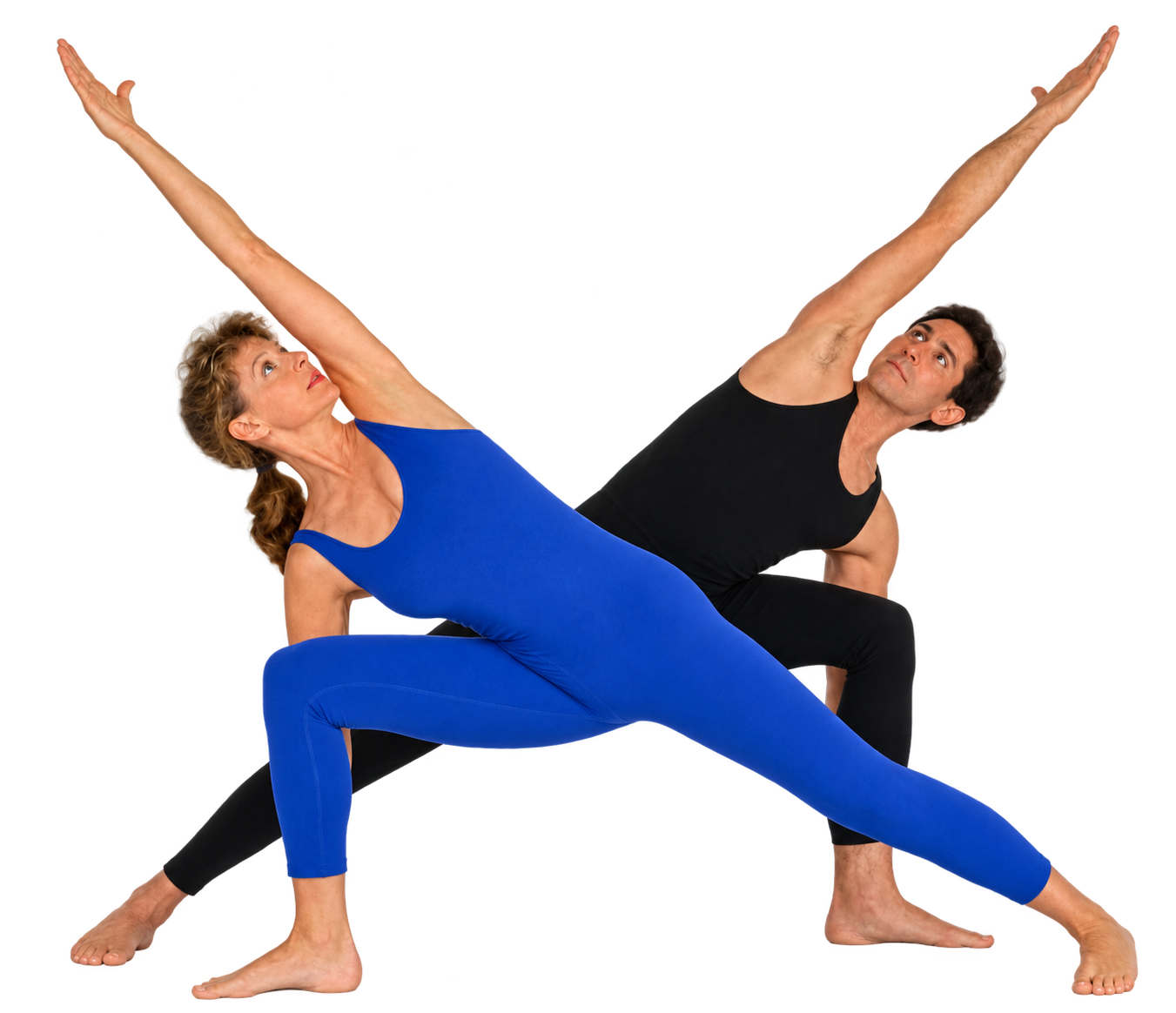
Ancient Yoga Has Evolved into a Modern Exercise System
I am often asked if ExTension and Recovery Yoga is different from the yoga taught at local gyms, or if it compares to established styles such as Hatha, Kripalu, Bikram, or Iyengar.
My response is usually: "Well, yes and no."
To understand why, it helps to look at how yoga got here. Originating in India around 4,000 years ago, yoga was initially a system of physical and sacred exercises inseparable from Hindu spiritual traditions. It remained largely unchanged until the early 1900s, when prominent yoga masters sent disciples to the West to share both the practice and its underlying Hindu philosophy.
Yoga remained relatively unknown in Western culture until the 1960s when the counter-culture movement embraced its physical potential and holistic values. Taught primarily in its classical Hindu format, early Western yoga demanded exceptional innate flexibility and a deep commitment to its traditional framework.
During the 1970s and 1980s, new styles emerged that separated the physical postures and meditative techniques from their religious roots. Many of these adaptations attempted to make yoga accessible to less flexible practitioners. In practice, however, they often fell into two extremes: intense approaches that forced the body into compliance—frequently causing injury—or ultra-passive routines that left students unengaged.
With few exceptions, classical and high-intensity styles remained unsuitable for older adults, individuals with chronic illness, or those recovering from injury. Having studied and taught yoga for most of my adult life, watching students struggle, get injured, or quit altogether prompted a fundamental question: How can yoga be adapted so that anyone—not just the naturally flexible—can reap its profound benefits without risk?
My approach began to transform after I trained as a neuromuscular therapist. Applying neuromuscular principles and biomechanical laws to yoga postures completely reshaped how I taught. Encouraged by students who thrived under these new methods, I began writing my first book, ExTension Yoga.
Just as the manuscript was near completion, life intervened: I was diagnosed with multiple sclerosis and as the illness progressed, I found myself unable to perform even the modified exercises I had designed for ExTension Yoga. The harder I tried to push through, the worse my symptoms became. It took years of trial, observation, and patience to realize a new paradigm: how to "do less and get more."
Ironically, my own physical limitations provided the ultimate testing ground. MS forced me to refine these neuromuscular principles so that individuals with severe physical challenges—including myself—could use yoga-based movement to feel better safely. These adaptations laid the foundation for Recovery Yoga , a system engineered to restore lost strength, flexibility, and maybe some endurance to those navigating chronic conditions, injuries, or the natural effects of aging.
So, to return to the original question: What exactly is ExTension and Recovery Yoga ?
ExTension Yoga is a Western, biomechanically sound approach to yoga-based movement anchored in physical science. Recovery Yoga is its gentle, restorative evolution. Neither claims to be a standalone, dogmatic style. Instead, together they represent an adaptive methodology—a functional bridge that allows anyone, from elite world-class athletes to those aging or managing chronic illness, to safely honor their body's limits while expanding its potential.