A Picture Is Worth a Thousand Words
Cathy, my local post office clerk, excitedly asked me as I stepped up to the counter: ”Did you see that yoga article in Monday’s paper? I thought you said anyone can do yoga!"
Shipping books to readers around the world takes me to the post office several times a week. In a rapidly growing community, our local post office remains a welcome sanctuary of small-town warmth. Rich’s corny humor and Cathy’s upbeat nature consistently turn routine errands into pleasant visits. Over the years, we’ve shared light conversation about my work and what yoga actually is—and is not.
Which brings us back to that newspaper article.
Accompanying the text were prominent photographs of a young, extraordinarily flexible woman contorting her body into positions that Cathy—and most adults over thirty—would consider excruciatingly painful, if not outright impossible.
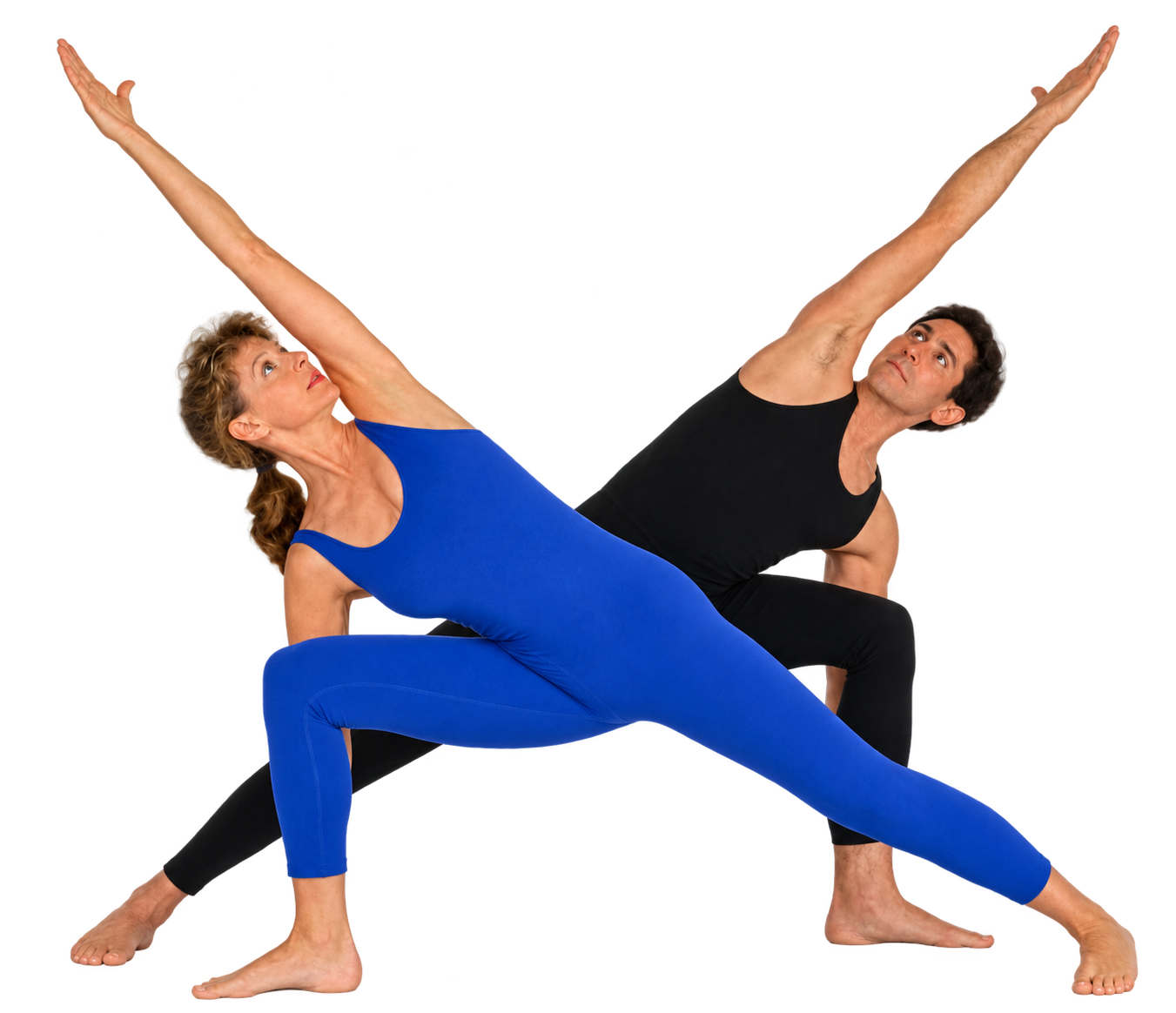
Even though the article itself accurately described five different approaches to yoga, ranging from gentle and accessible to highly athletic, those nuance-filled paragraphs didn't stand a chance against the imagery. Most readers took one look at the photos and declared "Forget it, I can’t do that," and turned straight to the comics. A picture really is worth a thousand words.
Unfortunately, this highlights a systemic issue in how popular media portrays yoga. Time and again, outlets showcase nimble, hyper-flexible young people executing unattainable poses. On the rare occasion an older practitioner is featured, it is almost always someone who has practiced yoga for decades and possesses a body far outside the average norm.
Having studied exercise physiology and having taught movement for over thirty years, I know firsthand that yoga—when appropriately adapted—is arguably one of the finest exercise modalities available. It offers profound health benefits for individuals of every age and fitness level, not just the naturally flexible.
The biological reality is straightforward: younger bodies possess an immense capacity to handle extreme mechanical stress. In fact, evolutionary biology designed young adults to push physical limits, bounce back quickly, and thrive under stress. When a young person sees an extreme yoga photo, they feel challenged or inspired.
For older adults, or those navigating chronic illness and injury, that same photograph communicates a very different message: danger. Cathy’s reaction was not an overreaction; it was a completely logical response to a visual narrative that systematically excludes average people.
This visual disconnect is further compounded in the studio. Many yoga instructors—whether young or old—are individuals who naturally excel at the specific style they teach. Naturally, they tend to teach what works for their own bodies, encouraging students to perform identical postures. Those whose bodies happen to fit the mold thrive, while the rest are left behind, assuming yoga simply isn't for them.
If there were an exercise system safer, more effective, or more transformative than properly adapted yoga, I would be practicing and teaching it today. But true accessibility requires looking past idealized books, photographs and rigid traditions. Real yoga isn't about forcing the body to mirror an extreme picture on a page; it is about adapting the principles of movement to serve the unique body that is you.