Long Hours at the Computer May Be Hazardous to Your Health
Even after many decades as both a neuromuscular therapist and a yoga teacher, I am as guilty as anyone when it comes to sitting at a computer for far too long without taking a break. When I get deep into writing an article or developing new material, my focus locks in, and I can easily remain glued to my chair for hours on end without a break.
From an evolutionary standpoint, sitting motionless in front of a screen is simply not what the human body was designed to do. Prolonged sitting creates a subtle, cumulative stress on your physical structure—whether you consciously register it in the moment or not. And as with any physical or mental stress, the body’s universal response is … soft-tissue contraction.
How intensely your body reacts to this repetitive strain depends on several factors: your overall health, past injuries, genetics, and age. Over time, unaddressed physical stress impairs both mental focus and physical vitality.
During extended computer sessions, soft-tissue contraction concentrates primarily in the neck, shoulders, upper back, and often in the lower back—the core areas responsible for supporting the weight of your torso, arms, and head. Left unchecked, this constant static load creates a vicious cycle: prolonged sitting leads to slumping or poor posture; poor posture increases mechanical stress; increased stress produces stiffness and discomfort; and that discomfort causes you to slump even further.
To interrupt this insidious loop, I often recommend using a wide, flexible back-support belt. Similar to the elastic supports worn by warehouse workers and builders, a supportive belt provides light, tactile feedback to your lower back and abdomen. By offering gentle structural reinforcement while seated, it reduces postural fatigue and helps break the cycle of slouching, stress, and mounting discomfort.
Of course, equipment alone is no substitute for movement. It remains vital to stand up periodically and move around, even if only for a minute or two.
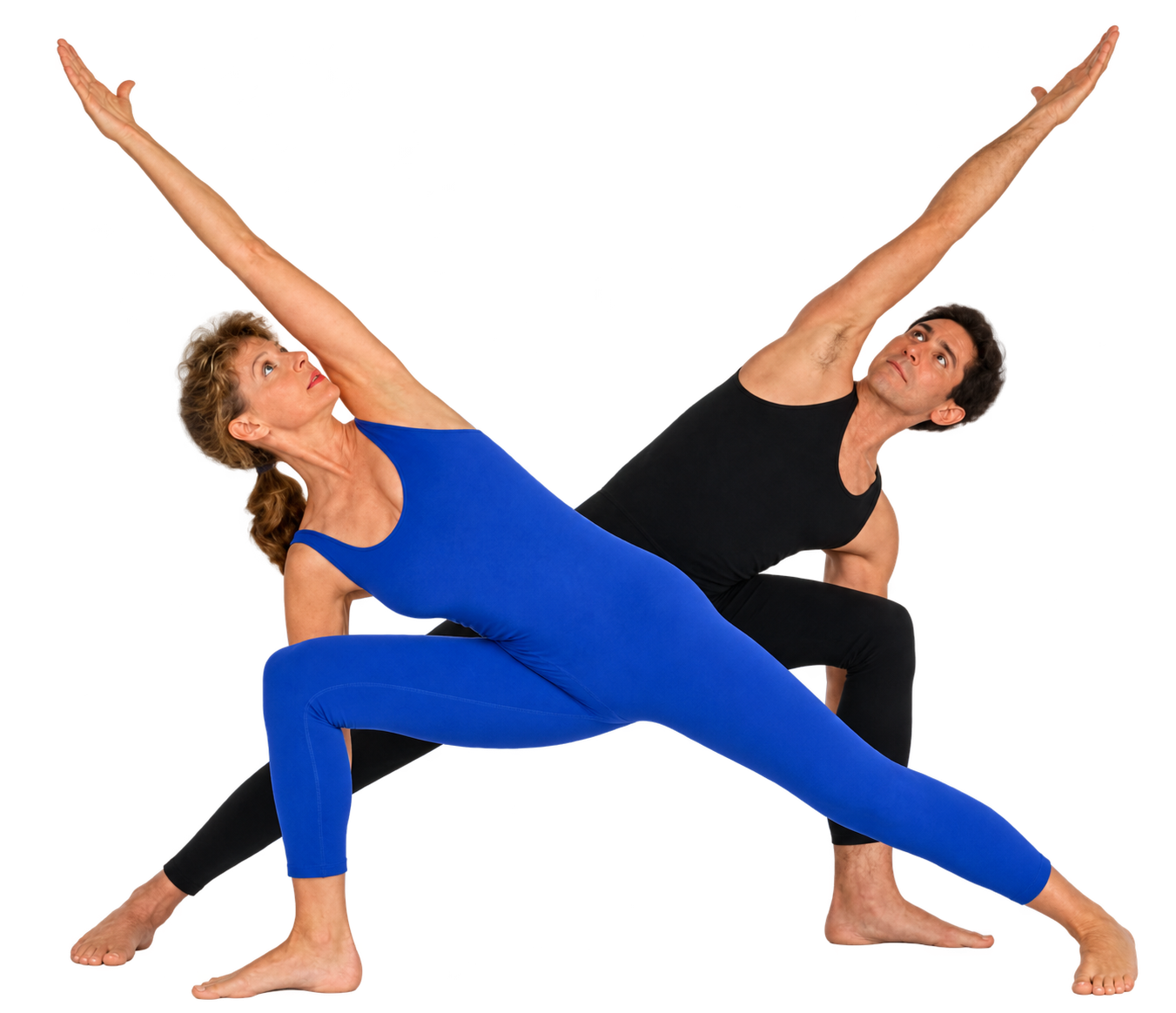
When you stand up, taking just sixty seconds to perform a few gentle, non-forcing movements can yield remarkable benefits. Simple desk or table stretches—where you use a stable surface to support your weight while gently lengthening your spine and legs like what’s shown in Recovery Yoga in chapter 7—provides an immediate release for compressed tissues.
As counterintuitive as it may seem, these brief, effortless movements yield far better results than deep, aggressive stretching. Forceful stretching provokes a defensive contraction in already tired muscles, whereas gentle movement communicates safety to the nervous system, allowing tight tissues to release naturally.
Prolonged computer work also takes a toll on your vision. Beyond simple eye dryness, the delicate muscles that control eye movement and focal depth operate under the exact same physiological principles as the larger muscles in your body. Staring at a fixed screen at a constant distance for hours can induce severe eye-muscle fatigue and strain.
Whenever you stand up to stretch, you give yourself a two-for-one benefit: as your body moves, looking around the room or out a window forces your eye muscles to shift focal length. This quick change in focus relaxes the ocular muscles, relieving eyestrain at the same time your body lets go of postural tension.
Prolonged desk work doesn't have to dictate how your body feels at the end of the day. By wearing supportive gear while seated, stepping away from your desk regularly, and letting your vision reset, you interrupt the cycle of chronic tension before it takes hold. By integrating an non-forcing yoga practice into these brief breaks can transform how you feel—using these simple, gentle table stretches help to: restore spinal length, quiet muscle guarding, and help to keep both body and mind feel better throughout your workday.