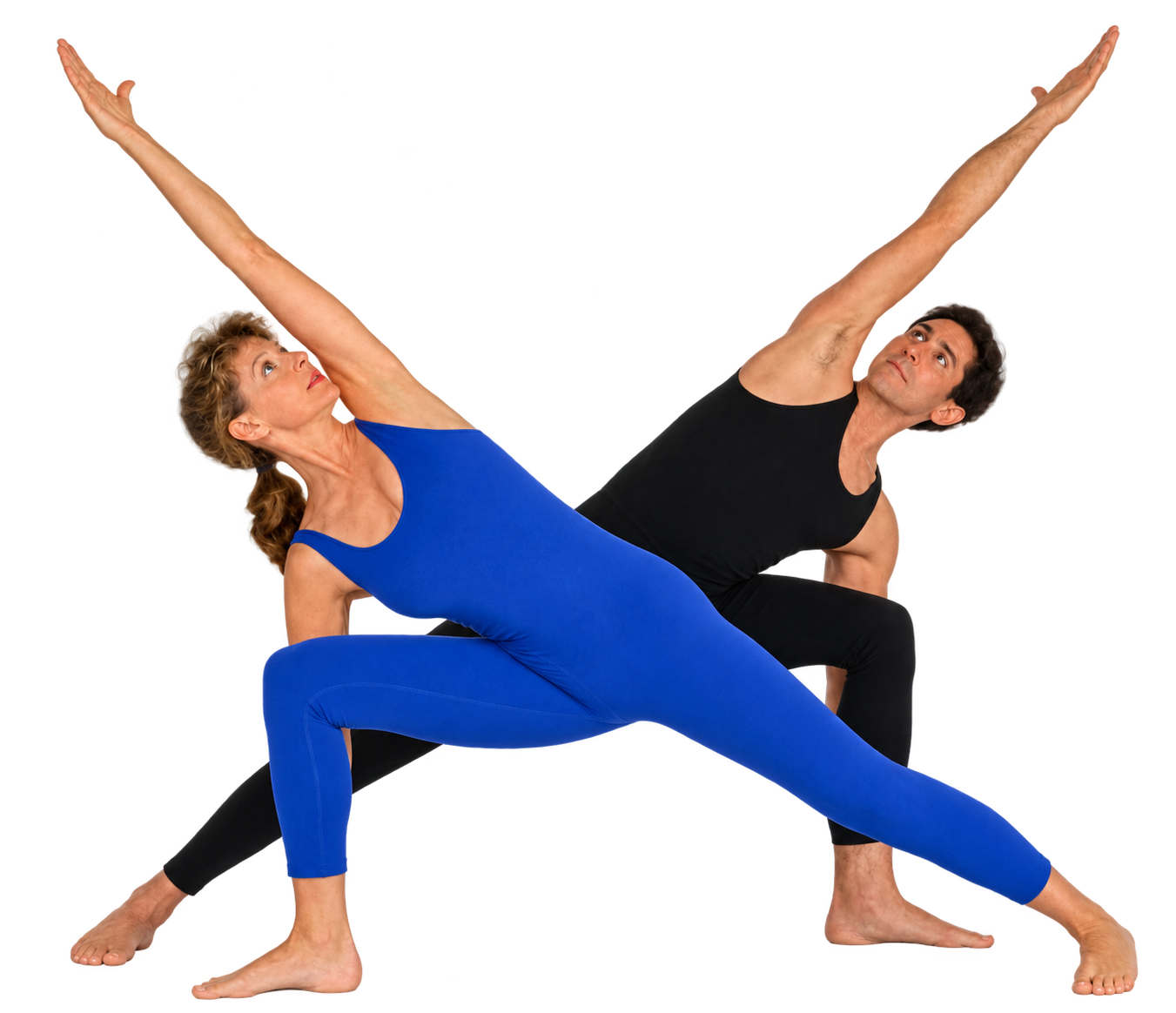
The Yoga Paradox: From Healing to High Performance
As a yoga teacher for decades, I specialize in the recovery and remedial aspects of yoga as well as training for general overall fitness. Given that focus, you might assume you’d need to look elsewhere for strong cardiovascular fitness.
Nothing could be further from the truth.
Yes, there are some styles of yoga so aerobic in nature that only the youngest and fittest can survive them. On the other end of the spectrum, there are styles so laid back and relaxed that the most vigorous thing about them is sitting on a chair or getting down to lay on the floor—and there are many styles in between.
What I appreciate most about both the ExTension and Recovery Yoga styles of yoga is its building-block approach to fitness. It doesn’t matter if you are chronically ill, injured, or even a world-class athlete—I will introduce you to your yoga practice the exact same way. And why is that?
Because the very first thing you did when you came into this world, and the very last thing you will do when you leave it, is breathe. Yet most people pay very little attention to breathing. It is a truly remarkable phenomenon: Do nothing, and it is there; exercise vigorously and your breathing increases and then subsides all on its own. But with yoga, as you learn how to consciously direct your breathing, amazing things begin to happen.
First, you will notice how relaxed you feel. Paradoxically, as you begin to coordinate your breathing with your movements, you will soon notice how energized you feel as well.
In fact, learning yoga is full of paradoxes. To be successful, you don’t have to be strong or even flexible when you begin.
As you continue practicing, your strength and flexibility will naturally increase, but success has nothing to do with how flexible or strong you are—or become—because flexibility and strength are simply the byproducts of an appropriate practice.
If the goal of yoga is not merely to increase flexibility or strength, then what is it? I am not entirely certain there is a single answer. The word yoga literally means "balance" or "union." Yet that definition yields another paradox: The human body is simply not built equally left-side to right-side and front-to-back; and therefore absolute human balance can never be obtained. Regardless of how hard you try, a perfect “balance” is impossible.
So if perfect balance is impossible, why practice yoga?
Because it feels right. Yoga helps to quiet the mind and helps to move the body toward balance and union. Why? Because practicing yoga lowers stress, improves physical functioning, and gradually enhances strength, flexibility, and endurance—even without forcing.
Whatever your current health or physical condition, as you begin to practice and build gradually; increased movement, strength and flexibility progress. But what about all those crazy yoga poses you see but you know you could never do, be rest assured; they have nothing to do with how you practice ExTension and Recovery Yoga .