Adaptation: Making Yoga Work for Your Sport
To master your favorite sport, your body must adapt to it. In sports science, this process is governed by the SAID principle (Specific Adaptations to Imposed Demands). The body adapts specifically to the exact nature of the stress applied. If your passion is running, for example, regular training produces favorable physical adaptations in your legs, heart, and chest muscles.
Adaptation for runners promotes deeper breathing and improves leg stamina, which enhances your capacity for future runs. However, muscles not primarily used for running—such as those in your arms—do not undergo the same adaptation.
Similarly, if softball is your passion, consistent batting practice helps adapt the specific muscles needed to become a better hitter. Yet batting practice does not enhance base-running, just as base-running does not improve batting.
While adaptation can transfer to other sports that rely on similar muscle groups and physiological systems, that transfer is rarely as significant as you might expect. Running does not necessarily make you a better cyclist, nor does swinging a softball bat translate to becoming a better golfer.
Weight training offers another clear example. Repetitive, weight-bearing exercise certainly builds strength, but building strength without maintaining flexibility actually impedes skill transfer to other sports—such as using weightlifting alone to improve your golf game. While your arms and legs may grow stronger, prioritizing raw strength can compromise the fine-motor coordination required for a smooth golf swing. Furthermore, the forceful exhaling required in heavy lifting is completely counterproductive to the fine, slow, quiet, and relaxed breathing required for accurate putting.
Focusing exclusively on adaptation to a single sport creates two major problems: the repetitive overuse of specific body systems, and the under-use of systems not directly involved in your sport. Both conditions invite injury. You will always perform better in your favorite sport when your entire body is well-balanced—when you are both strong and flexible, and when you have precise control over your breath.
Exercise physiologists have long known that cross-training allows the body to work more efficiently while reducing the risk of injury. Cross-training develops your entire body by distributing the overall training load across various physiological systems. Appropriate cross-training also keeps you active during recovery. If one part of your body is impaired, you can continue training using other parts. Finally, cross-training adds much-needed variety to your routine, helping to prevent mental and physical burnout.
Because most people assume yoga is primarily about stretching, you might think it serves as the a good cross-training tool. Usually, it does not. Although stretching is an important component of any athletic regimen, yoga stretching by itself can actually lead to neuromuscular imbalances and frequent muscle, tendon, or joint injuries.
Just as there are many different types of shoes, the same holds true for yoga. A heavy steel-toed boot, a high heel, and a running shoe all serve a purpose, but wearing the wrong one for a marathon will leave you injured. The holds true for yoga: There are numerous styles and methods of yoga, with some being far safer and more suited to your body’s actual needs than others.
Most traditional styles are "classically" influenced, with their origins rooted in ancient India. Developed and originally practiced by ultra-flexible vegetarians living literally close to the earth, classical yoga is often ill-suited for the modern Western body.
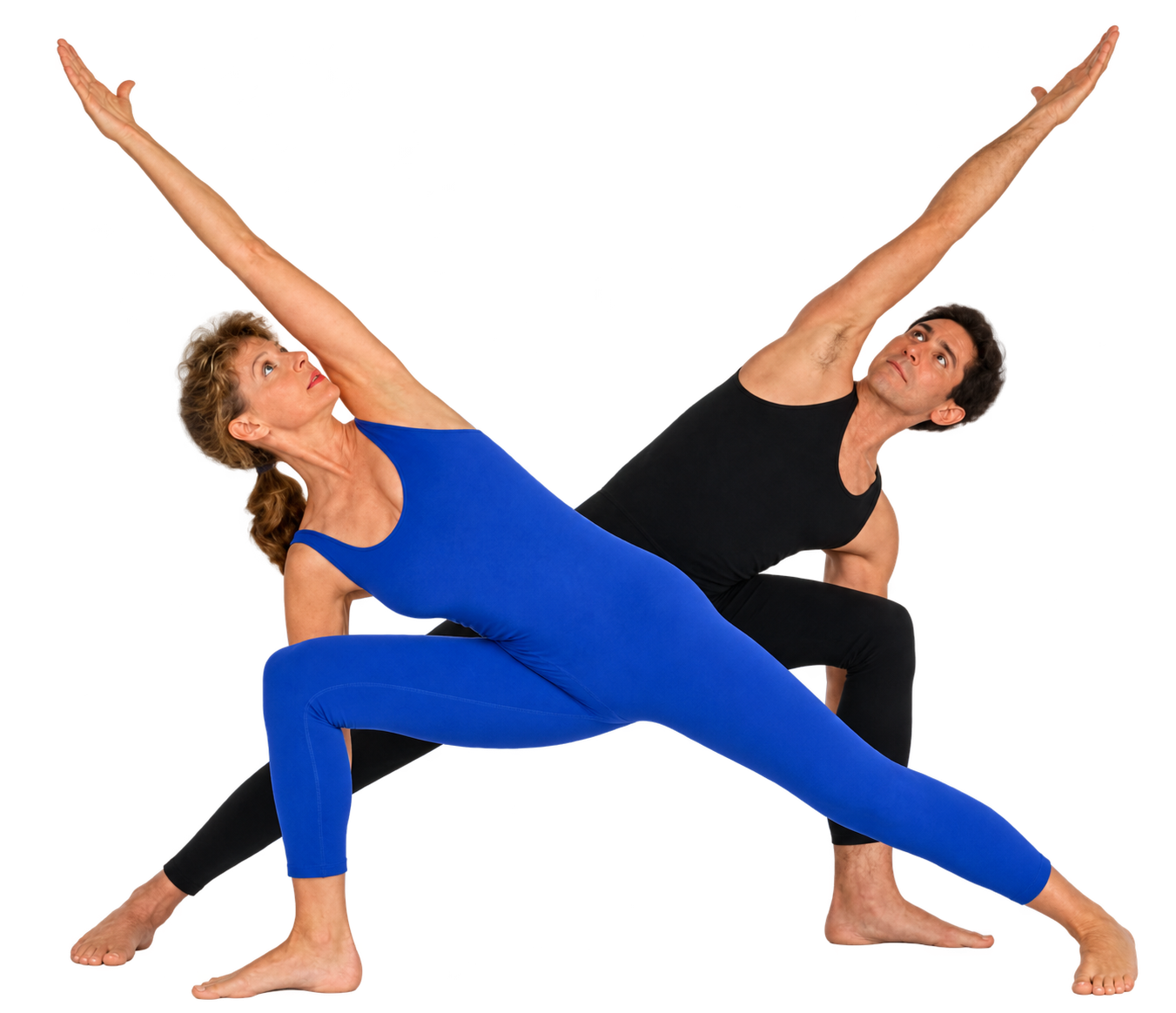
On the other hand, there are approaches to yoga that focus directly on its true definition: "balance and union." Without forcing, these methods, such as ExTension and Recovery Yoga promote both strength and flexibility across all of the body’s various systems.
These approaches to yoga teach you how to work with your body rather than against it, showing you how to build range of motion without straining ligaments, joints, and tendons. An intelligent, building-block practice doesn't just stretch tight muscles; it also strengthens them. Instead of creating new physical imbalances, it restores natural alignment and teaches you how to control your breathing under physical stress. That is when yoga becomes the ideal cross-training tool—one that elevates your performance, sharpens your focus, and helps protect you from injury in whatever sport you love.