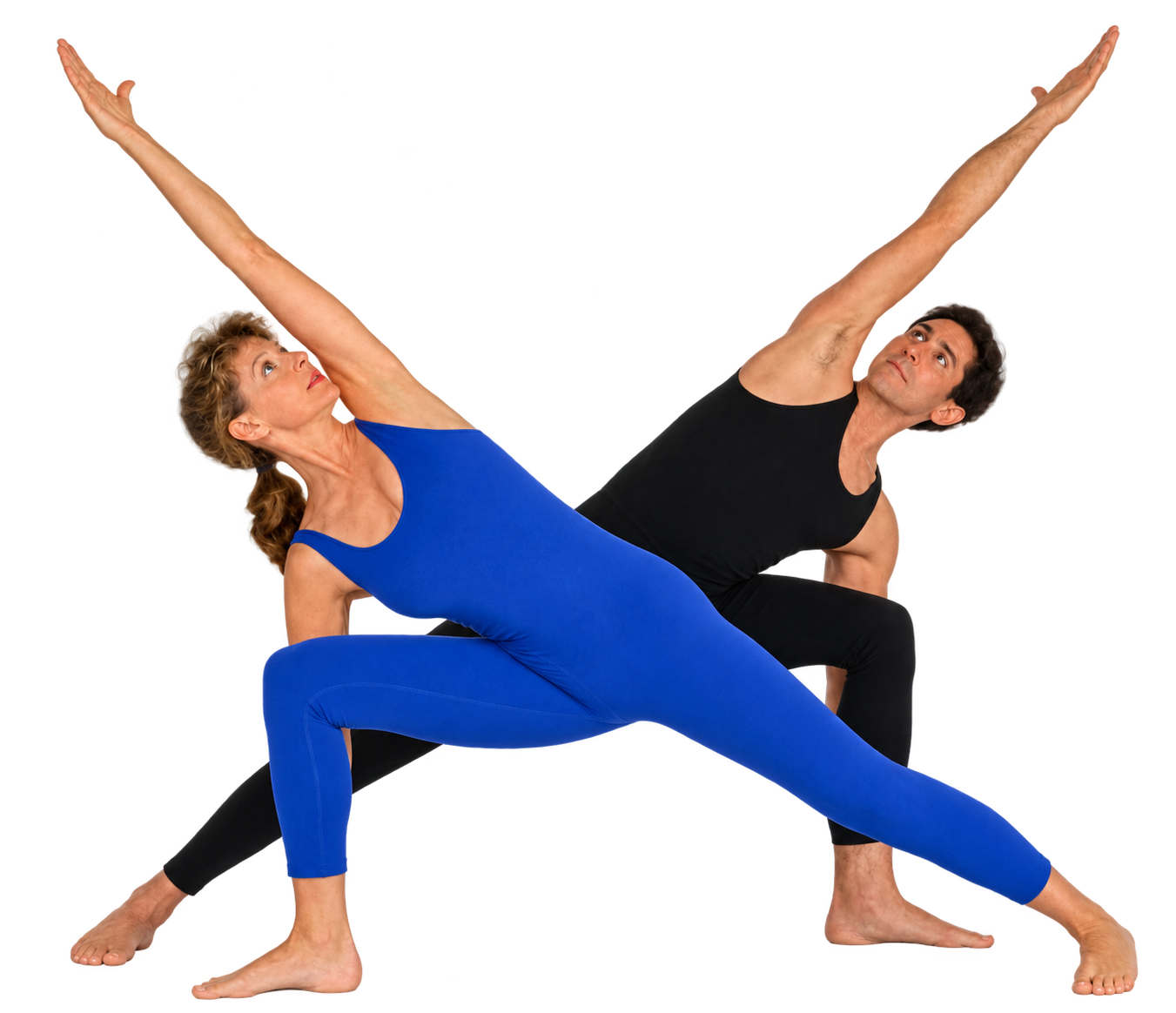
Linda’s Story: Yoga and Recovery
Three years ago, Linda was in a severe automobile accident. She wanted to take whatever time was necessary to recover fully, but life’s pressing realities could not wait. With a husband, two active children, dogs, horses, and a new house under construction, Linda was forced back into her routine almost immediately. She was up and running—except for one major obstacle: she kept falling down.
Along with her other injuries, Linda suffered damage to her vestibular nerve, compromising her brain’s ability to process balance and head orientation. Whenever she stood up, she lost her equilibrium. When she closed her eyes, she lost all sense of which way was up. Constantly dizzy and nauseated, her entire perception of spatial awareness had been disrupted.
Before the accident, Linda and her family were exceptionally active, sharing a love for horseback riding, rollerblading, cycling, and motorcycle trips with her husband. After the injury, none of this was possible. She was literally out of balance. Linda desperately wanted to exercise and rejoin her family’s active life, but every attempt exacerbated her symptoms, leaving her frustrated and disheartened.
After more than two years of conventional therapy with little meaningful progress, Linda decided to try a different path. She was drawn to yoga because she intuitively sensed it would not carry the rushed pace of her standard physical therapy sessions, and she was intrigued by the idea that yoga could serve as both exercise and a system for injury recovery.
She scheduled her first yoga lesson. After just six months of a regular, adaptive yoga practice, Linda’s balance issues were all but resolved, allowing her to comfortably return to the family activities she had feared were gone forever. While her results were dramatic, they were far from unusual.
An appropriate yoga practice moves you systematically toward balance—a integration of body, breath, and mind. What distinguishes intelligent yoga from standard exercise programs is that you do not try to do yoga; instead, you begin by establishing a fundamental awareness of the breath. From that quiet baseline, you learn to move incrementally with your breathing, working strictly within what your body can do, rather than forcing what it currently cannot.
At first glance, this approach might sound slow or repetitive, but the reality is quite the opposite. Working this way becomes deeply engaging and challenging, regardless of your starting physical condition or flexibility. Appropriate yoga works deep within the nervous system by reconditioning and reeducating your proprioceptive pathways—much like the way you originally learned to coordinate your movement as a child.
Through this non-forced practice, you enhance not only your physical balance, but also your strength, flexibility, and endurance. There is no magic to yoga, nor do you need to be strong, flexible, or even healthy to begin. By meeting your body where it is, yoga provides a practical foundation for restoring balance to your movement and your life.